

Wednesday 16th of April 2025
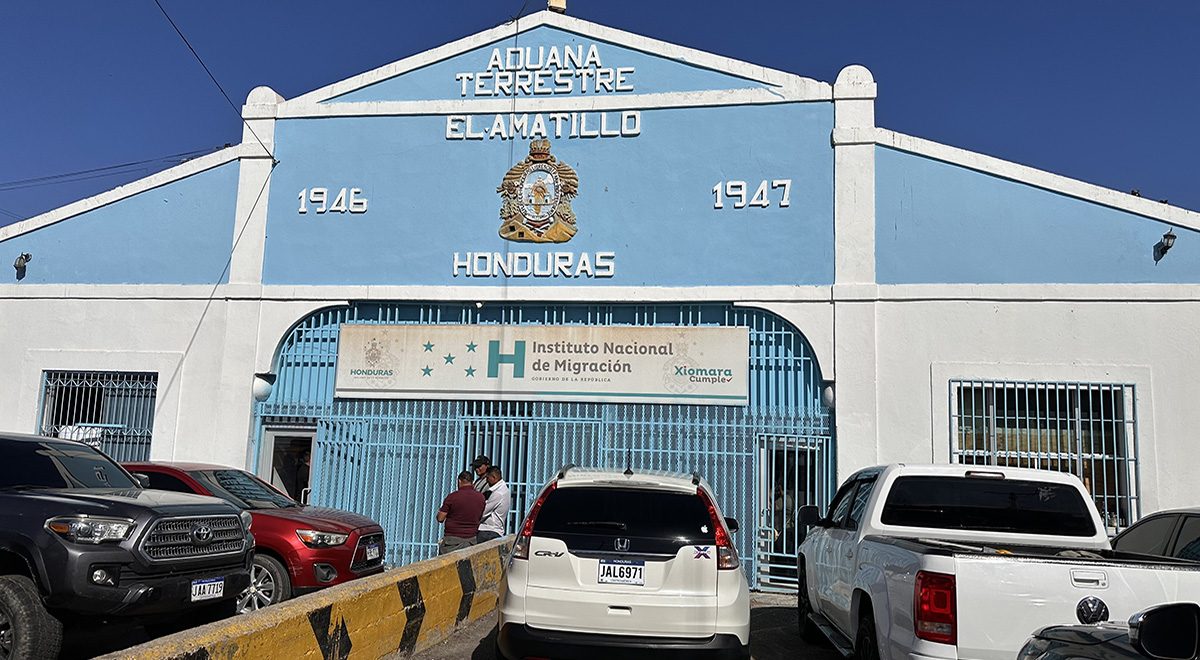
Crossing the land border from El Salvador to Honduras has generally been straightforward, but this trip was a different story. A recent shift in policy by the Honduran government now mandates British citizens to obtain a visa, a retaliatory measure following the UK's decision to require visas for Honduran nationals entering the UK. Navigating the visa process for Honduras is no small task and certainly not meant for the faint-hearted.
The extensive documentation required for each crossing has made travelling to Honduras nearly impossible for charitable endeavours over the past year. It is disheartening that there is no flexibility or consideration for charity workers seeking entry, and unfortunately, no support or advice from the British Embassy in Guatemala.
Nevertheless, I decided to attempt the border crossing without a visa, hoping the immigration officials would be more accommodating than their counterparts at the embassy in Guatemala City. If that plan failed, my alternative was to spend several days in El Salvador, where I could commence my study on street-living children instead.
I wasn't alone on this journey; Herbert, his daughter Valerie, and Frank, the new Director of SKDGuatemala, joined me. Their practical assistance would be invaluable in carrying out the evaluations I intend to start in both countries.
Given the uncertainty surrounding my potential entry into Honduras, my fellow travellers prudently remained on the El Salvador side of the border, ready to regroup if I were turned away.
To my delight and surprise, I was warmly received by a young female immigration officer in Honduras. With a friendly stamp on my passport, she welcomed me into the country, easing my concerns.
Eager to reunite, I called Herbert, inviting him, Valerie, and Frank to proceed through El Salvador immigration and join me in Honduras. As I waited for about ten minutes, anticipating their arrival, I stood by the immigration office, observing the steady flow of cars. A group of young boys energetically approached each vehicle, offering parking assistance and keeping a watchful eye over the cars.
"Hi there!" I heard, turning to meet the gaze of a young man who greeted me in English and offered his translation services. Introducing himself as Marcos, he shared that he had spent most of his life in the USA but was originally from Mexico. His travels through Central America brought him to this border, where he fell for the charm of Honduras and its lifestyle. Marcos had settled into a rhythm of earning a modest living at the border, enough to sustain his daily needs and cover his rent.
As we chatted, two of the boys working alongside Marcos approached, offering their assistance. By now, Marcos realised I spoke Spanish, and we both assured the boys that I was fine. This understanding opened the door to a more profound conversation about how Marcos and the boys operated at the border.
Soon, we were joined by Jose, a spirited nine-year-old with a bright and engaging smile. He looked up at me with curious eyes before quickly immersing himself in our conversation, adding his own lively energy to the exchange.
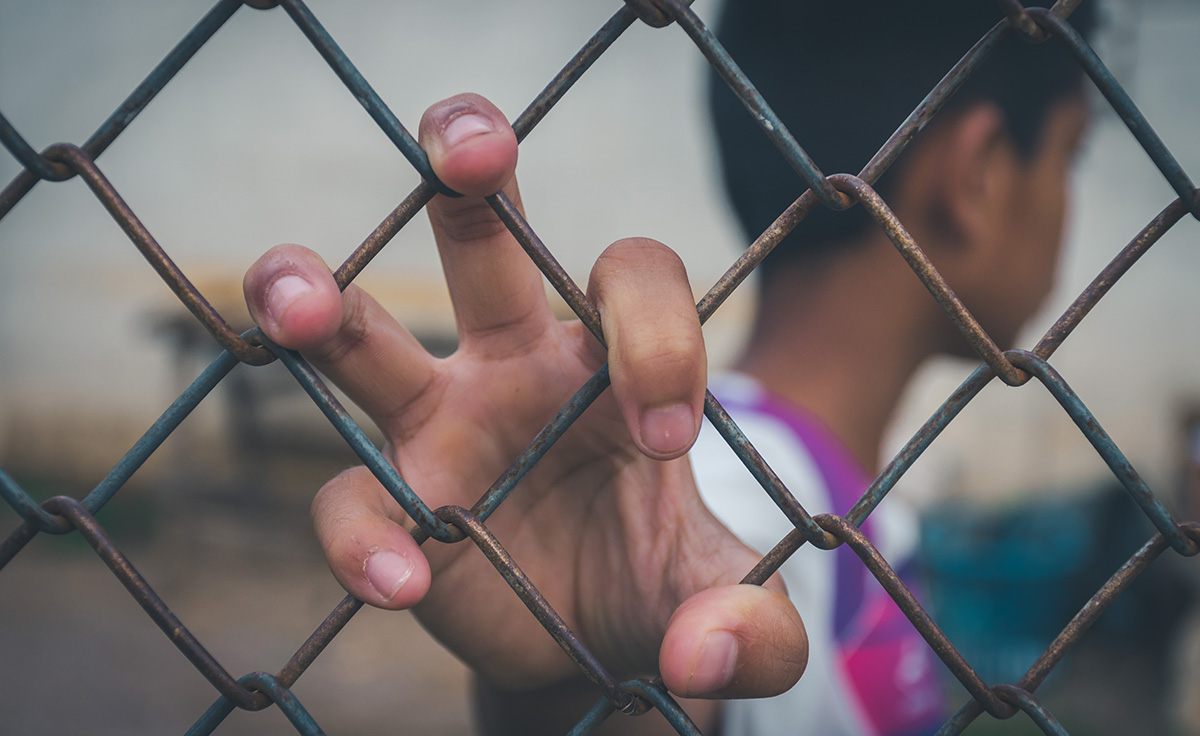
As the next car arrived, the boys swiftly dashed off to offer their services. Marcos lingered, continuing our conversation, and unfolded a deeper glimpse into life at the border. He explained that while most of the boys lived with families on the Honduran side, Jose was left to fend for himself on the streets. The details of why he had run away from home remained a mystery, but Marcos revealed the harsh reality of Jose's current life—he was being used as a drug mule, shuttling substances from one side of the border to the other.
By the time my travel companions arrived, I had absorbed a whirlwind of information from Marcos and the boys about the inner workings of the border. In just ten minutes, I learned about their earnings, living situations, the movement of drugs, and, most heart-wrenchingly, Jose's plight on the streets.
As we journeyed from the border to the capital, Tegucigalpa, I had ample time to reflect on the conversations and the stark realities I had just witnessed. Leaving Jose behind was a heavy decision; knowing a wonderful children's home in the city that could readily welcome him made it even harder.
As we travelled towards Tegucigalpa, our car ride sparked discussions about our mission to document the true scale of children living on the streets of Central America. This endeavour was seen as a vital step, one that would eventually extend into South America and beyond, highlighting the global issue of street-connected children.
Our reflections naturally touched on the myriad reasons kids find themselves on the streets, including a haunting story shared by Frank. He recounted how a friend from church was grappling with the devastating news of his fifteen-year-old daughter's abduction while she was simply running an errand to the local shop. Tragically, her story echoes that of countless children in Central America who go missing daily.
Statistics from PGN, Guatemala's government body for child protection services, reveal that while child abductions have seen a decline since 2019, the numbers remain distressingly high. Each day, ten children are reported missing in Guatemala, and shockingly, two of them are never found. The Alerta Alba-Keneth, Guatemala's missing child alert system, has been crucial in locating and reuniting many children with their families, but much work remains to safeguard the vulnerable and prevent such disappearances.
As we drove on, there was a shared consensus among us: despite the significant strides made in Guatemala to bring the number of street-living children down to zero, the journey is far from over. There remains a vast number of children still in need of assistance and protection.
We anticipate that our comprehensive study will require around twenty years to complete, but we remain hopeful. With the support of various national and international commissions and the implementation of effective strategies, there is a genuine possibility of achieving a significant reduction in the number of street children.
Our dream and vision are clear—a world where no child lives on the streets. The challenge before us is enormous, but our passion and determination to see this dream realised are equally powerful. With your help and unwavering support, we aim to reach out to those children whom society has forgotten, offering them hope and a chance at a better life.
 Duncan Dyason is the founder and Director of Street Kids Direct and founder of Toybox Charity. He first started working with street children in 1992 when he moved to Guatemala City and founded The Toybox Charity. His work has been honoured by Her Majesty the Queen and he was awarded an MBE the year he celebrated working over 25 years to reduce the large population of children on the streets from 5,000 to zero. Duncan continues to live and work in Guatemala City.