

Tuesday 1st October 2024
Last night, we received heartbreaking news: one of the young people who had been in our mentoring programme was tragically gunned down in front of a fast-food establishment near our mentoring centre in La Terminal, Guatemala City.
Jose, just 17 years old, was approached by someone who pulled out a gun and shot him multiple times. He passed away almost instantly and was identified soon after by his family, who lived nearby.
Jose's tragic death is a stark reminder of the ongoing violence that claims countless lives in Guatemala City each week. Despite a reduction in the overall homicide rate, there are still 42 violent deaths reported every week, and alarmingly, 40% of these victims are young people. Our hearts go out to Jose’s family and all those affected by this senseless violence.
When I received the devastating news of Jose's death, I had just spent over an hour driving home from La Terminal. Noticing an incident a couple of blocks ahead, causing a traffic jam, I decided to detour around the market. To my horror, on arriving home, I discovered that Jose was lying dead in the street, and this tragic event was the source of the traffic disruption.
Growing up in Guatemala City was fraught with difficulties for Jose. I vividly recall the first time I met him outside our mentoring centre. It was dusk, and we had just wrapped up our activities for the day. I noticed a small figure hiding behind my car on the street.
As I approached, Jose’s 8-year-old sister, Karla, emerged and started asking about our activities at the centre. Karla's smile lit up as I described our day’s events, and her relaxed conversation seemed to reassure 9-year-old Jose. Encouraged by his sister's interaction, he cautiously stepped out from behind the car to say hello. That moment marked the beginning of our connection with these two resilient children.
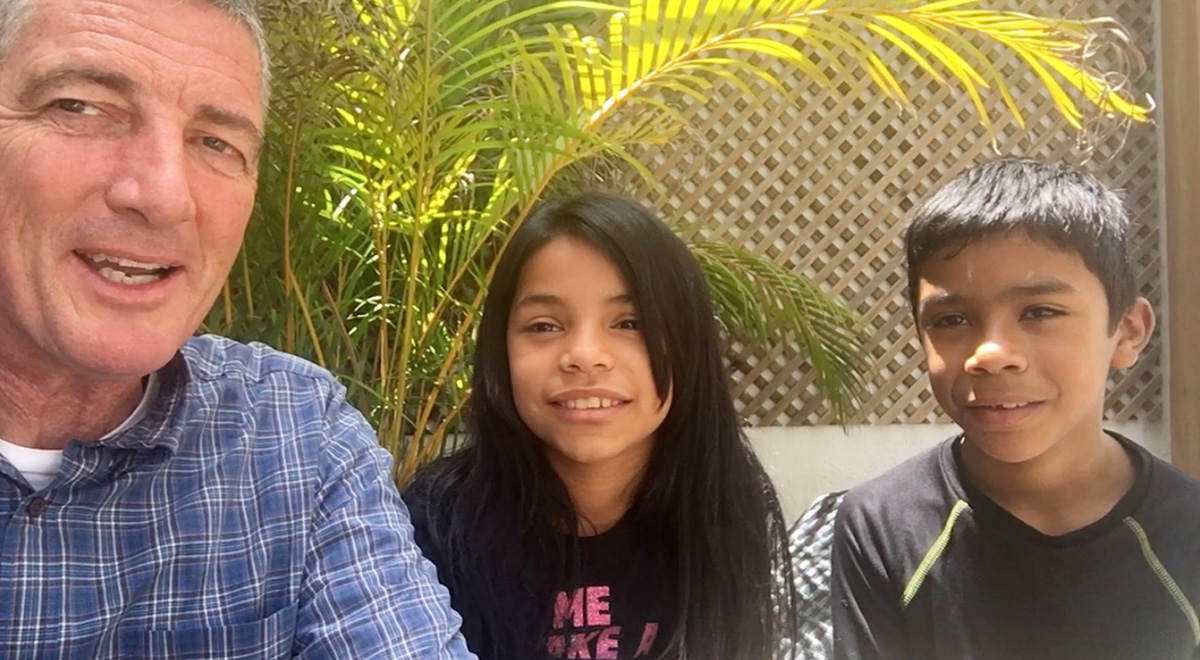
Both children (photo above in the mentoring centre) joined the mentoring programme that very week and soon began to relish the activities, often telling the team how safe they felt at the centre. Their childhood had been harrowing, and as they gradually opened up about the murder of their parents and their subsequent struggle for food and amusement on the streets, it became clear just how vital our support was.
As trust blossomed, we were able to enrol both children in school and provide them with the daily support they desperately needed. Living nearby with their grandparents, who were preoccupied with running a bar, left the children essentially on their own. The odds were stacked against them, and despite our intense investment in their lives, adapting to the world around them remained a constant struggle.
Sadly, Jose (photo right in happier times) was taken into care but repeatedly ran away, increasingly leading a street-connected life that put him at grave risk. We watched helplessly as his health and well-being deteriorated.
Earlier this year, Jose returned to the mentoring centre, attempting to fit in once again. Evidently, he was searching for a sense of belonging and connection—something that had always eluded him. Despite his efforts, the stability and support he so desperately needed seemed just out of reach. His tragic story is a poignant reminder of the immense challenges many young people face here and the critical need for continuous support and intervention.
Now, we find ourselves planning yet another funeral. Another precious life was lost. Another missed opportunity. And another child for whom we grieve deeply.
Last week, I sat down with a teenager who was facing a challenging time. Carlos needed support to complete a project for his final year at college. His chosen subject was communications, and he had to produce a 20-page colour magazine and accompanying publicity material.
Carlos had relocated to a town in northern Guatemala where internet access and support were scarce. As a result, he needed help to complete his college year since most of his coursework was now online.
Carlos, another product of our mentoring programme, had made positive strides in his life. He had made good decisions and was determined to build a promising future for himself. Despite the hurdles, his resilience and ambition shone through.
Carlos's journey was fraught with challenges. His uncle had set up a small business in La Terminal, and Carlos, living with his mother, would often help out after college to support himself and his mum.
Towards the end of 2023, Carlos witnessed two men threatening his uncle with demands for extortion payments. Unable to pay, the men returned with a chilling warning: if they didn't pay, both Carlos and his uncle would be killed. Terrified, Carlos fled the city to live with his sister in a small town in northern Guatemala. Just two days later, he received the devastating news that his uncle had been murdered.
Growing up in La Terminal is a harsh reality for most kids. Almost all of them witness violence on a weekly basis. The constant exposure to brutality, seeing family members killed or lost to drug overdoses, slowly conditions these children to adopt survival strategies that keep them alive. This relentless exposure fundamentally alters their worldview, normalising experiences that most people would find unimaginable.
Carlos's story illustrates the severe challenges young people face in such environments, underscoring the importance of our mentoring programmes and the critical need for ongoing support and intervention.
Carlos has successfully completed his project and can now return to the quiet town where, as he tells me, “Not much happens, but it is safe.” He will finish his college course and begin searching for full-time work, embarking on his adult life journey. Carlos is grateful to have made it out of La Terminal.
In stark contrast, Jose's life has tragically ended, cut short in his prime. The world has lost all the potential and talent he possessed. His untimely death propels us forward, reinforcing our commitment to make a difference. We are driven even more today to rescue more children, intervene before time runs out, and ensure their futures are not lost.
 Duncan Dyason is the founder and Director of Street Kids Direct and founder of Toybox Charity. He first started working with street children in 1992 when he moved to Guatemala City and founded The Toybox Charity. His work has been honoured by Her Majesty the Queen and he was awarded an MBE the year he celebrated working over 25 years to reduce the large population of children on the streets from 5,000 to zero. Duncan continues to live and work in Guatemala City.