

Wednesday, 12th of February, 2025
Walking the streets of Guatemala City at night is invigorating—a pulse of life not everyone would find relaxing. Yet, having missed the street work deeply, I was eager to return, to reconnect with the places where we focus on prevention and visit the young adults who call these streets home.
What I wasn't prepared for was the desperation that greeted us, a stark reminder of past traumas and losses.
Accompanied by Juan Carlos, a seasoned street worker and friend, part of the SKDGuatemala team, we both felt an urgency to hit the streets again after the Christmas hiatus and the bustle of January as we prepared to reopen the mentoring centres.
In the cool evening air, after the rush of traffic had subsided, we relished a quieter walk along the main 5th Avenue. Our journey took us through the dark, shadowy maze of La Terminal's passageways, leading us to the homes ravaged by a massive fire in December, yet not fully rebuilt. The families welcomed us warmly, eager to share their new beginnings with us.
A brisk walk through the emptied central market area, all packed up for the night, highlighted a significant change—very few now call these streets home. Had we traversed this path a decade ago, glue-sniffing children and teenage parents with infants would have abounded. Now, the streets fulfill their intended purpose, ferrying people and goods seamlessly from one side of the market to the other.
We wandered past El Hoyo, a place that was central to my early street work. Once a bustling alleyway teeming with street-dwelling children, it has transformed into a burgeoning furniture manufacturing district.
Our journey then led us to La Casona (the big house) —no longer a large makeshift house, but a gathering spot for a small group of young adults and two teenagers living on a street corner. Opposite them stretched a forlorn triangle of land that the Municipal government once hoped would be lush with grass and plants. Instead, frequent use as a toilet and dumping ground has left it barren and inhospitable.
Despite the setting, the young adults and teenagers welcomed us warmly. Two among them expressed their discontent, questioning why we hadn't visited them over Christmas with gifts and cake. Their comments reminded us of the simple expectations of care that, sadly, we can not always provide.
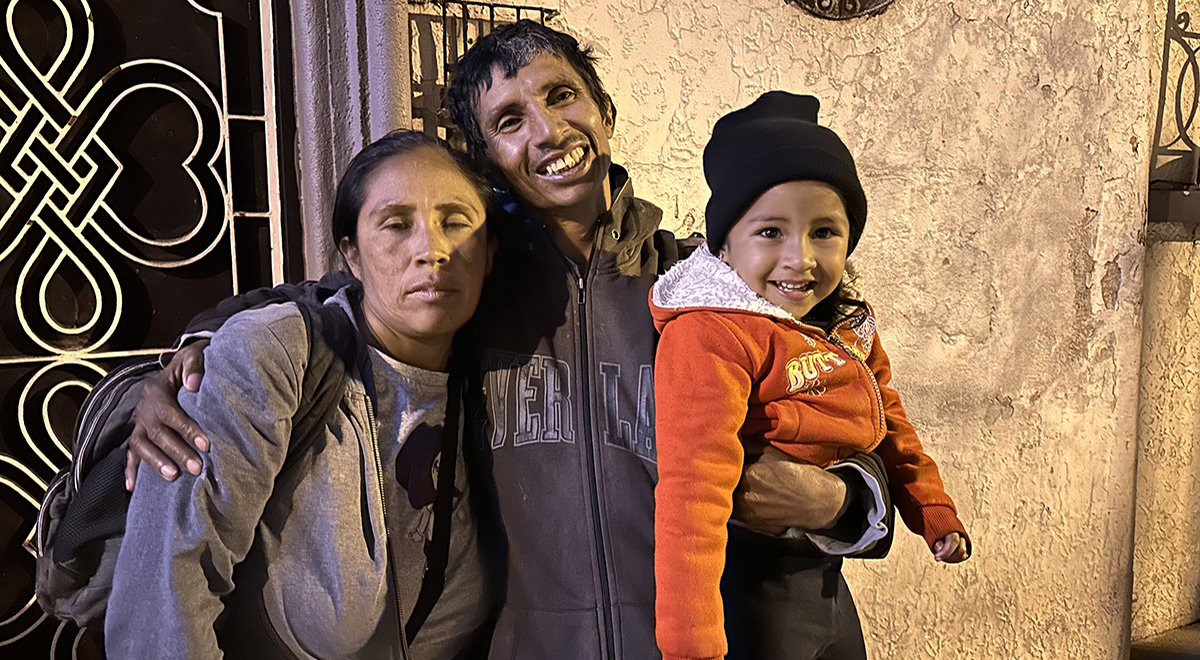
We put aside the complaints, and our attention shifts to a small girl, straining with determination as she tries to climb up the wall where many of the group are gathered. Her father beams at me, his hand resting on my shoulder, reminiscing about his own childhood spent on these streets and the times I had stepped in to help. The years have taken their toll on him, with nearly four decades etched into his sun-weathered face, arms, and hands.
I remember when I first met Gerson in El Hoyo. He was among a group of about 15 young boys, lost in the haze of glue, kicking around a plastic ball. Seizing the chance to challenge a new street worker, they kicked the ball into a pile of human excrement before launching it in my direction. It was a rough introduction, but Gerson always chuckles when he recounts the story and how much joy it brought them all. He falls silent, eventually apologising, and reflects on how my persistence, returning repeatedly, proved my genuine care for them. At the time, I didn't quite see it like that!
Gerson gently lifts his two-year-old daughter to his side, who is already showing clear signs of needing sleep. As she rests in his arms, Gerson’s "wife" joins him, a bit unsteady from the solvents, but determined to capture a family moment. She finally asks me to take a photo. With Gerson attempting a smile beside her, he mentions it's time to prepare their cardboard bedding for the night.
I take a step back, lightly touching the little girl's head, and ask if they need a ride home. “No, we will go home tomorrow,” Gerson says. It strikes me then that this little girl, adorably tired and innocent, is to spend the night nestled beside her parents on the street—a street life that means being in the thick of solvent abuse and witnessing scenes no child should see.
I realise I can't simply scoop up the kids and take them home, but my heart silently wishes Gerson would say, “Please, take her.” To offer her a childhood unburdened by drugs, free of street life’s dangers and the looming shadow of violence, would be a blessing.
An hour later, I found myself in the front seat of Juan Carlos's car, grateful for his kind offer to give me a lift home. Initially, I had planned to walk the half-hour to my apartment, but this ride provided a precious moment to pause and reflect.
A familiar tightness gripped my chest as we approached the second set of traffic lights, making it hard to breathe. I realised I was reliving trauma, unable to shake the image of the little girl from my mind. It was unjust and unfair, and we were leaving her vulnerable on the streets. The weight of what might become of her immobilised me, making it difficult to engage with Juan Carlos's questions.
That evening, I knelt by my bed, pouring my heart out to God. The world’s injustices crystallised in the form of that sweet two-year-old girl, who, through no fault of her own, had to bear the burden of hardship and suffering.
Our work here is often a struggle and rarely straightforward. Yet, I am resolved that we must persist in our efforts to reach more children at risk of a life on the streets, trusting that brighter days are possible and within reach.
 Duncan Dyason is the founder and Director of Street Kids Direct and founder of Toybox Charity. He first started working with street children in 1992 when he moved to Guatemala City and founded The Toybox Charity. His work has been honoured by Her Majesty the Queen and he was awarded an MBE the year he celebrated working over 25 years to reduce the large population of children on the streets from 5,000 to zero. Duncan continues to live and work in Guatemala City.