

Sunday 11th August 2024
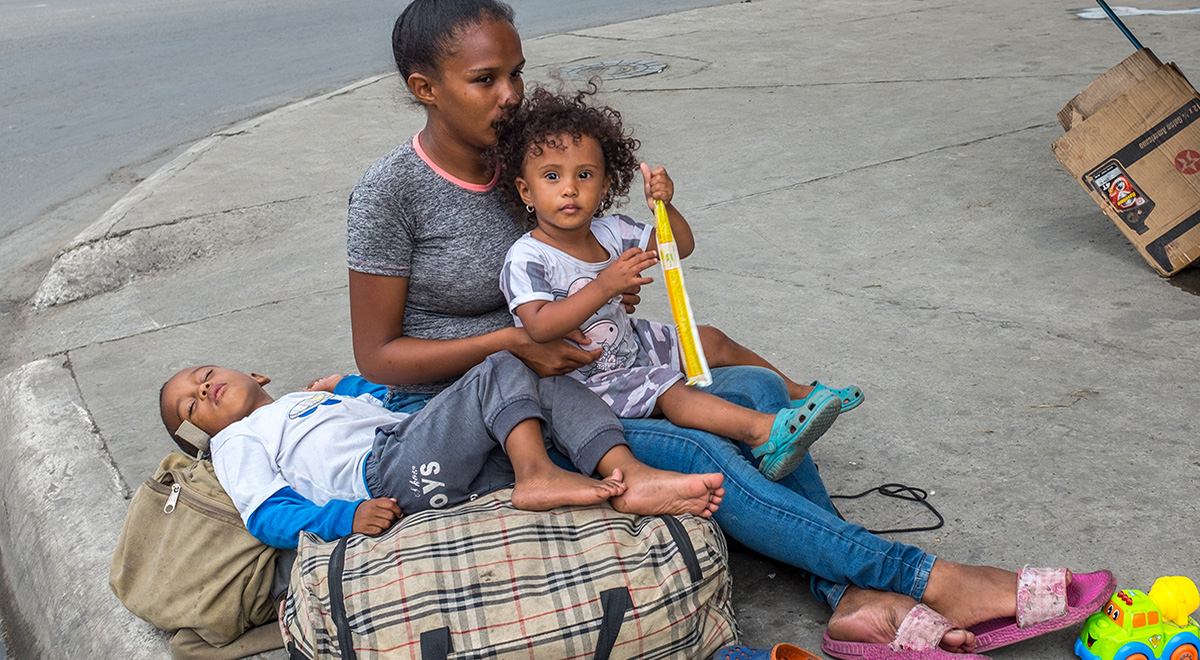
As you walk through the bustling streets of Guatemala City, it's impossible to overlook the presence of migrant families. They are now everywhere—huddled in shop doorways or clustered in parks and areas under the watchful eyes of patrolling police. These days, an overwhelming number of these families hail from Venezuela, driven from their homeland by forces beyond their control.
Venezuela's crisis has become a river of humanity, nearly eight million strong, flowing into neighbouring countries. It stands as the largest displacement crisis in contemporary history. What drives this exodus? It's a heart-wrenching mix of an unravelling economy, democratic breakdown, political repression, and a harrowing list of human rights abuses. Crimes committed by organised criminal groups, including sexual violence, murders, disappearances, human trafficking, robbery, and intimidation, have painted their lives with fear and suffering, forcing them to seek refuge wherever they can. The UNHCR's reports are not just statistics—they echo the cries of real people searching for safety and a sliver of hope amidst the turmoil.
For many of these families, Guatemala is just a chapter in a longer, arduous journey to the perceived promise of the United States. This trek spans a staggering 4,300 miles and can consume six to nine months of their lives, assuming fortune and the kindness of strangers favours them. The road is fraught with peril, and not all reach their hoped-for destination. Some find a semblance of refuge within the countries they pass through, choosing to make these places their new homes. Tragically, some never complete their journeys, falling victim to mortality along the way. Those who do survive often carry harrowing tales etched into their memories—stories of abuse, robbery, rape, and kidnapping that turn their quest for a better life into a relentless nightmare.
This week, I gathered with an earnest group of volunteers from the Puerta de Esperanza ministry we support in Guatemala City. Together, we embarked on an evening walk through the streets of the capital, our mission clear: to meet migrant families and listen to their stories. Each tale mirrored the harrowing account of Leonardo, whose story echoes the anguish and resilience of so many others on this perilous journey.
I do not relay Leonardo's story to justify his choices or to advocate for illegal migration. Rather, I do so with the hope that his voice, and the voices of hundreds like him, will be heard. Perhaps, in hearing these stories, more people will be moved to take action, to offer protection and compassion, especially for the young children trapped in this inhumane quest for a safer life.
Three months ago, 28-year-old Leonardo and his family took the decision to leave their family home in Maiquetia on the northern coast of Venezuela and head for the United States. Poverty and the fear of further political repression from the Maduro government were significant factors in helping Leonardo to ask his family to join him on the perilous journey through Central America.
Leonardo's family consists of eight brave souls: his brother, sister-in-law, their two young children, his wife, their baby son, and a cousin. They embarked on their journey with hopeful hearts, knowing that once they crossed into Colombia, they would be met with kindness and care. In Colombia, they found sanctuary; generous locals offered them rides and donated money for bus fares and temporary shelter. But their fortunes took a dark turn when they left the safety of their Colombian hosts and approached the border of Panamá.
Between Colombia and Panamá lies a 70-mile expanse void of roads—the notorious Darién Gap. Unlike the tourists and adventurers who fly over this treacherous terrain to Panama City and continue northwards to Costa Rica and beyond by bus, migrants like Leonardo's family have no such luxury. They face the daunting challenge of crossing the Darién Gap on foot—a perilous journey through a formidable and dangerous jungle that serves as the dividing line between South and Central America. It's a journey fraught with risks, demanding every ounce of their courage and resilience, a test of their will to survive and press forward against all odds.
Leonardo tries to compose himself as he knows this part of the story is the hardest to tell. His wife seems to hold onto their 9-month-old baby even more while staring into the central park as she knows what is coming. Leonardo takes a deep breath and tells me about the family who they got to know on the way and travelled with them through most of the Darrién Gap. The family were hopeful they would make it to the other side of the Gap, even though they knew the risks involved from the elements and local gangs.
On the second day of their arduous trek through the dense jungle, after crossing a deep river, Leonardo's family encountered a harrowing turn of events. Emerging from the jungle, a group of armed men—some clad in police uniforms—descended upon them, separating families and seizing phones, money, and other valuables. Sensing the imminent danger, Leonardo quickly turned off his phone and hid it deep within his underwear.
The nightmare intensified as Leonardo's friends were herded into a particularly dense part of the jungle. The air soon filled with the sounds of cries, beatings, and, eventually, heart-piercing screams. An hour later, the ordeal came to a chilling end, and the family they were travelling with made their sorrowful way back towards Colombia. Their two-year-old daughter lay lifeless, her final hour too horrific to detail here. The group's spirit was shattered, and they walked in stunned silence for hours, passing many rotting bodies, before grief finally broke through, spilling out into tears.
Leonardo, making the sign of the cross over his heart, whispered a solemn belief that the little girl was now in heaven, cradled by God's arms. With unwavering faith, he prayed daily for a safe journey for his family, a prayer that carried them all the way to the borders of Guatemala.
As Leonardo recounted their trek, he painted a vivid picture of the desperation and poverty they encountered in Nicaragua. The faces of those they passed mirrored their own plight, a stark reminder of the widespread struggle still continuing in Central America. Crossing into Honduras, they were struck by an unexpected act of kindness—border officials, moved by their story, handed them money to help continue their journey. This small mercy stood out like a beacon in their long, arduous road, infusing them with a renewed sense of hope and the strength to push forward.
Returning from the central park to the Puerta de Esperanza centre, the distance gave us space to process the heart-wrenching stories we had just heard. It was a moment to thank God that we each had a bed to sleep in that night.
As we walked, memories of the early 1990s flooded back to me. I recalled the growing number of children on the streets, fleeing conflicts in other Central American countries. They had hoped to journey north, yet many ended up staying in Guatemala, with some tragically losing their lives here. Determined to prevent history from repeating itself, we resolved to find ways to respond and help the children caught in this tide of mass migration.
One thing became unmistakably clear during our walk home: we couldn't just stand by and do nothing. Our faith and shared compassion compelled us to act. Where this will now take us, God only knows.
 Duncan Dyason is the founder and Director of Street Kids Direct and founder of Toybox Charity. He first started working with street children in 1992 when he moved to Guatemala City and founded The Toybox Charity. His work has been honoured by Her Majesty the Queen and he was awarded an MBE the year he celebrated working over 25 years to reduce the large population of children on the streets from 5,000 to zero. Duncan continues to live and work in Guatemala City.