
Saturday 1st August 2026
I never imagined what my role as a charity worker would include. Had I known, I might have prepared myself a little better before stepping onto that plane in 1992, bound for Guatemala with little idea of what lay ahead or whether I would ever return.
No one explained that I would need to become a speaker, writer, fundraiser, website developer, plumber, electrician, counsellor, family therapist, street worker, prison visitor, volunteer coordinator, office manager, driver and, above all, someone entrusted with the lives of hundreds of vulnerable children.
Of all those roles, being a street worker remains the one I enjoy the most. It is demanding, unpredictable, physically exhausting and, at times, dangerous, yet it is also deeply rewarding. What no one prepared me for was the emotional weight of the work, the heartbreaking stories children would quietly entrust to me, the abuse they had suffered, and the burden of carrying those memories long after walking away. After thirty-four years, I have learned many practical skills, but the emotional burden has never become lighter. If anything, it has grown heavier with each passing year.
This week I was able to return to the streets of La Terminal in Guatemala City. Strangely enough, despite its notorious reputation, it still feels like home. I have always found the people here to be generous, resilient and fiercely loyal. Winning that trust, however, took time. In the early 1990s, Guatemala’s civil war forced thousands of indigenous families to flee the countryside and seek refuge in the capital. Fear, suspicion and trauma shaped everyday life, and it took many months of simply walking alongside people before hearts slowly began to open.
As I wandered through the rubbish-strewn streets this week, carefully avoiding the uneven pavements that seem to catch me out more often these days, memories came flooding back. My first visit was to see the Rodriguez family.
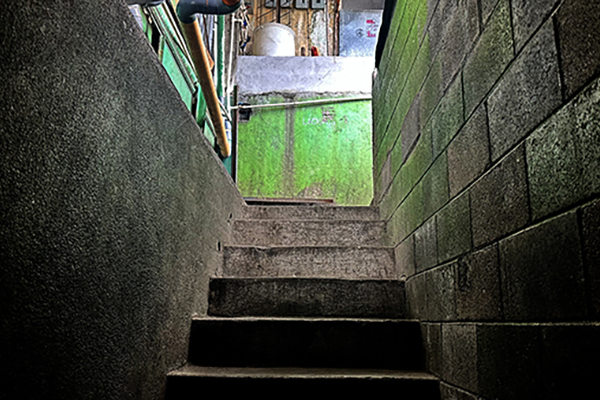
I walked slowly along a dimly lit alleyway before entering a labyrinth of narrow corridors, each concealing dozens of tiny homes behind weathered wooden doors and faded curtains. As my eyes adjusted to the darkness, I noticed several children sitting silently on cracked concrete steps leading to another floor above. They hardly moved. I couldn’t tell whether they were smiling or simply watching. The silence felt strangely heavy.
A striped curtain was suddenly pulled aside, and a young girl glanced at me before disappearing back inside. Moments later, another girl emerged. Her face lit up with a smile as she called my name and ran towards me. She wrapped her arms tightly around me. It felt like far more than a warm welcome. It felt like a desperate plea for help.
Without saying a word, she took hold of my arm and led me into the tiny room where her family lived. Her brother was lying on a bed in his underwear while her mother sat nearby, tears streaming down her face. Fighting to compose herself, she quietly whispered that she simply could not go on living like this.
Before I had time to respond, the curtain was pulled aside once more, and her husband stumbled into the room. His bloodshot eyes struggled to focus. The smell of alcohol filled the cramped space before he even spoke. Attempting to steady himself, he lurched sideways into a battered wooden cupboard that held almost everything the family owned. The mirror shattered with a sharp crack that echoed around the room. His wife barely reacted. It was painfully obvious she had witnessed this scene countless times before. Quietly, almost wearily, she asked him to leave.
By now her son had hurriedly pulled on some clothes. Looking directly at his father, he said firmly, “Dad, just go.” Then, turning towards me, he quietly added, “See, Duncan, he’ll never change.”
His father sat silently on a small plastic stool for a few moments before slowly drifting back into the darkness outside.
My attention turned to Anita, a bright twelve-year-old girl who, in different circumstances, would probably be excited about school sports, planning sleepovers with friends or sitting with her family watching a film together. Instead, her fragile life has stolen much of her childhood. She is tiny for her age, small enough to be mistaken for a nine-year-old and is underweight and underdeveloped. She rarely raises her eyes from the floor, yet when she does smile, it transforms her face. Even when she speaks, her voice is little more than a whisper, as though she fears making enough noise to awaken some unseen danger nearby.
As I spoke with her mother, Anita quietly backed into the narrow gap between an old wardrobe and the wall. She wrapped her arms around her knees, crouched down and disappeared into the shadows. Later, her mother explained that this tiny space had become Anita’s refuge, her safe place whenever life became too overwhelming.
School is becoming increasingly difficult for her. Her teacher describes her as deeply withdrawn and increasingly concerning. The emotional wounds she carries are preventing her from growing, learning and thriving. Some children escape into the streets. Anita escapes into silence and seems to become one with the darkness of the corner.
Watching her disappear into her safe place was almost unbearable. I found myself longing to scoop her up, take her somewhere safe and gently help her discover that hope still exists.
A short while later, I found myself walking along another corridor. This one could not have been more different. Children laughed loudly as they played games with bottle tops in the entrance. One of them invited me to join in. I smiled and told them I would have loved to, but I had another family to visit. Before moving on, I stood for a few moments simply enjoying the sound of children laughing together until one little boy accidentally let out an enormous fart that sent the whole group into uncontrollable fits of laughter. Some things are universal.
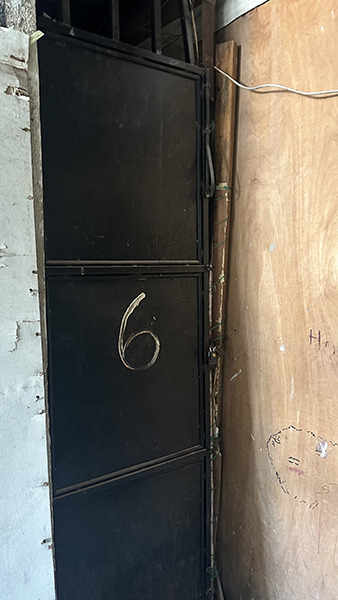 Eventually I reached Room Number Six and knocked gently on the black metal door. It opened just enough for someone inside to check who was there, then swung wide open. Jackie immediately greeted me with a warm side hug, followed by her mother embracing me and her uncle offering a firm handshake. We sat together on old wooden chairs that looked as though they had survived many years of faithful service.
I asked how Jackie was doing and whether she was still attending the mentoring centre. My questions immediately touched a nerve. Her mother sighed deeply before explaining that Jackie’s school grades had fallen dramatically and she was spending more and more time wandering the streets.
Unlike Anita, Jackie is tall for her age. Her smile is bright and infectious, and she struggles to sit still, her legs bouncing constantly beneath the chair as though she carries an endless supply of nervous energy. Her mother fears she is becoming increasingly drawn towards life on the streets. Jackie’s older sister had also become heavily street-connected from the age of nine, experiencing things that no child should ever have to face. Now she tries to warn Jackie, but sadly, her advice falls on deaf ears.
As plates of warm tortillas and black beans were passed around the small circle, I gently asked Jackie how she felt about everything her mother had shared. Her answers were thoughtful, honest and deeply concerning. Unlike Anita, Jackie wasn’t retreating from the world around her. She was running towards it. The streets offered excitement, friendship and a sense of belonging that home could not provide.
Then I asked a simple question.
“Are you still learning music at school?”
Everything changed.
Her face lit up. She placed her tortilla back onto the plate and enthusiastically began explaining how much she loved music, how she was learning instruments, how she dreamed of mastering both the guitar and the drums, and how much she enjoyed playing alongside her friends. In that moment I saw something that had been hidden throughout our conversation: hope.
I asked whether she would like to help me develop a music programme in the mentoring centre. Before I had even finished the sentence, she was almost out of her chair.
“When can we start?” she asked excitedly.
As I left the maze of dark corridors and stepped back into the bustle of La Terminal, I found myself thinking about Anita and Jackie. They are both twelve years old, both live only a few blocks apart, and both carry burdens that no child should ever have to bear. Yet they respond to their pain in completely different ways. Anita retreats into the shadows, finding refuge in the tiny gap between a wardrobe and the wall, while Jackie is drawn towards the excitement, freedom and dangers of the streets.
It reminded me once again that there is no single story of childhood trauma. Every child carries it differently. Some withdraw into silence, while others search desperately for belonging wherever they can find it. Our calling is not simply to rescue children once they reach the streets; it is to notice them long before they reach the streets, to walk alongside them through the darkest moments of their young lives, and to remain with them long enough for hope to become stronger than fear.

Your Content Goes Here
CLICK HERE to find out the answer and how you could help educate a child at risk in Guatemala today
 Duncan Dyason is the founder and Director of Street Kids Direct and founder of TOYBOX UK, El Castillo in Guatemala and SKDGuatemala. He first started working with street children in 1992, when he moved to Guatemala City after watching the harrowing BBC documentary “