
Street Kids Direct have been involved in mapping the whereabouts of children living on the streets in Guatemala since it began, and before that, the charity´s founder, Duncan Dyason, was involved in identifying the places children lived on the streets and ensured records were kept since 1993.
With this in mind and having seen the number of children on the streets of Guatemala fall from an estimated 5,000 in 1991 to zero now, Street Kids Direct would like to expand its mapping and gap study to other places around the world. The study is estimated to take 3-4 years and will involve volunteers and project partners using technology to help count and map street-living children.
A mapping and gapping study is a geographical survey of countries that have traditionally had children living on the streets, first mapping where they are and the numbers, then mapping charities, government agencies, and others who work for the benefit of the children. As the mapping takes place, one can start to see where the gaps are, where children are not being reached, and where there is duplication.
In 2024 Duncan and others from Street Kids Direct will begin to travel, at their own cost, to other countries to begin the study. We will be looking for projects and contacts of anyone who works with street-living children only. Our focus must be to impact the lives of children living on the streets and see how the work we have done in Central America could offer some support or solutions to bring the number of children living on the streets around the world to zero!
How our specialist database of vulnerable children impacts lives
Street Kids Direct have created a unique database programme and app that helps staff and volunteers keep track of the children in their care.
Most days, the team needs to access children’s records, and often this means accessing information in times of emergency or when offices are closed.
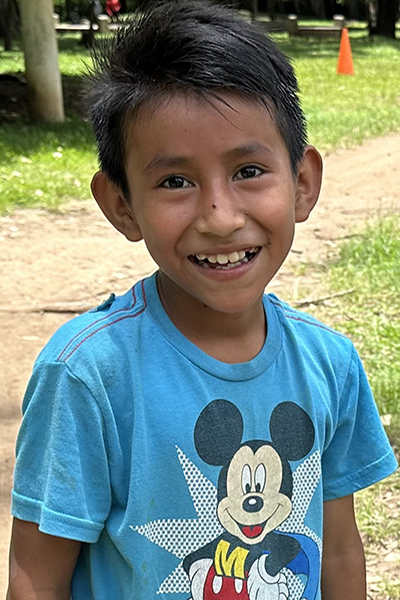
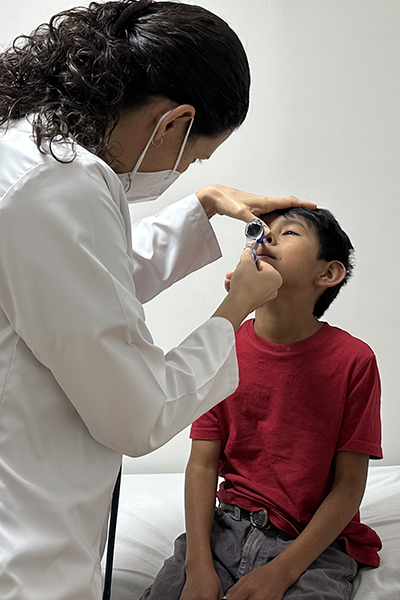
One boy who was recently helped is 10-year-old Denis from Guatemala, who felt very sick with possible Dengue Fever and was haemorrhaging blood. The SKDGuatemala team took him from the tin shack he lives in with his family and rushed him to an emergency clinic, accessing his personal and medical information en route. The information helped process him quickly, and he received the attention and medication he needed. Subsequent checks (photos on the left & above) showed a dramatic improvement in his health, and he is now well enough to return to school and to normal life.
Developing technology to help children
Street Kids Direct feels that the technological advances, together with Ai, will help us identify where the children are most at risk and in need and help provide a coordinated approach with partners and local and national government to help children everywhere to not see the streets as a viable option for life.
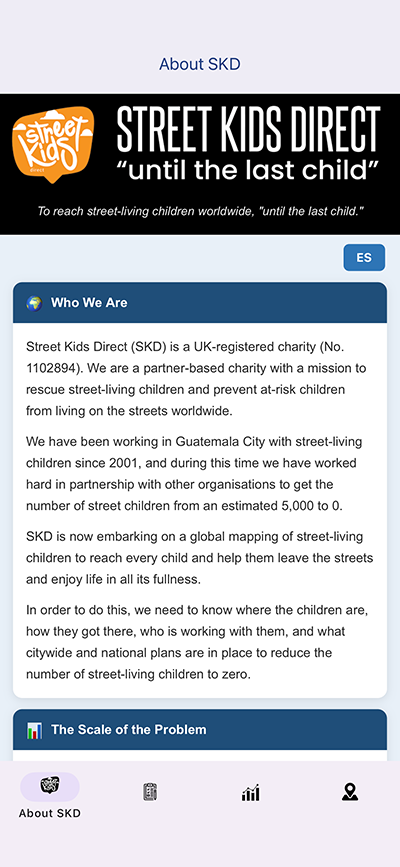
Street Kids Direct has developed an app to help with data collection. The Field Evaluation Tool is available on Google Play and the App Store.
The tool will enable the SKD team and volunteers to collect data during their in-person country visits and upload it to the central SKD database. The data will help us identify where street-living children are and who is working with them.